Everskies: Virtual Dress up
- 4.5
- Rating
- 10.00M
- Installs
- Free
- Price

 Analysis by App-foxy
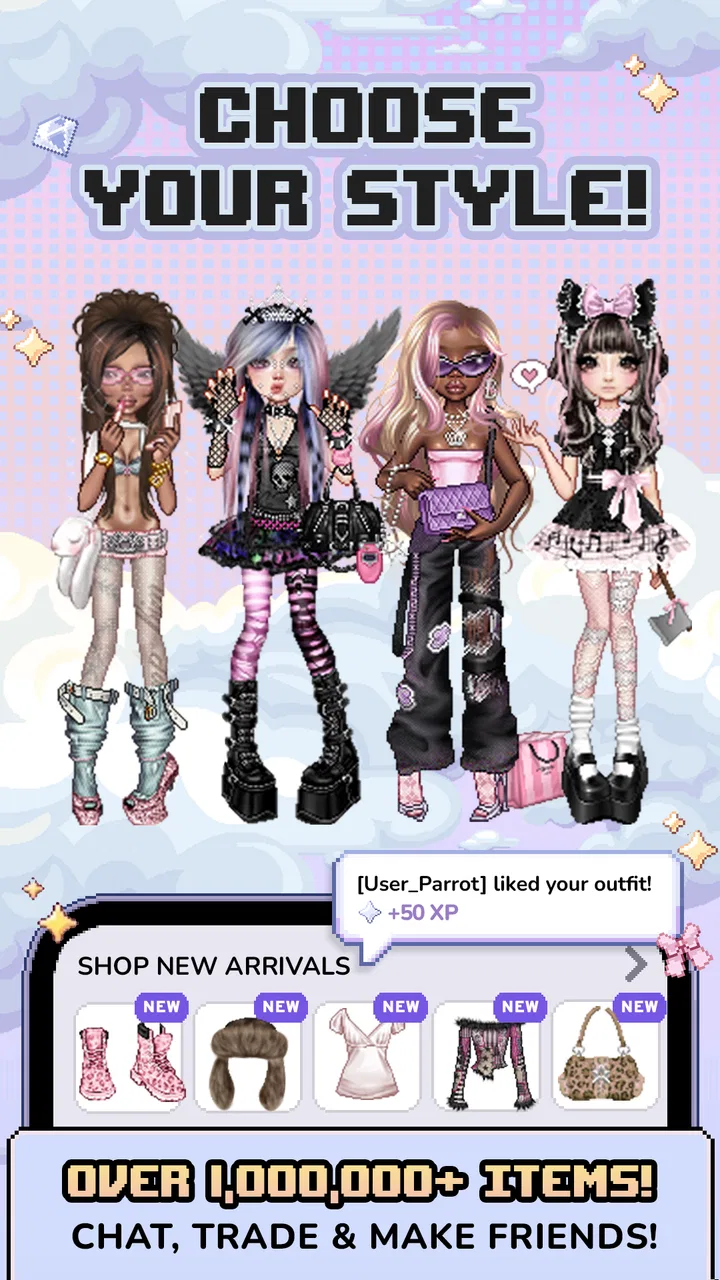
Everskies: Virtual Dress up is the kind of role-playing game I open when I want something creative rather than competitive. Its main appeal is simple: I can build an avatar, adjust the look piece by piece, and spend time in a social world where personal style matters as much as progression. After using it, I see it less as a traditional life simulator with a fixed story and more as a dress-up and community experience that gives me room to decide what “playing” means.
That flexibility is its strongest quality, but it also explains why the game will not suit everyone. If you want fast battles, a clear campaign, or constant objectives, this is probably the wrong choice. If you enjoy experimenting with outfits, browsing other people’s ideas, and gradually shaping an online identity, it has much more to offer. Pocket Worlds has built something that feels closer to a playable fashion community than a conventional role-playing adventure.
How I use the game from the first launch
My usual starting point is to treat the avatar as a project instead of trying to create a perfect look immediately. I first decide on a general direction, such as casual, dramatic, soft, or unusual, and then choose the most important visual pieces around that idea. This prevents the wardrobe from becoming an overwhelming pile of unrelated options. I can always return later and replace one item without rebuilding the entire character.
You May Also Like

 Blood Strike: 2.5 Anniversary
Blood Strike’s Loadouts Turn Every Drop Into a Tactical Gamble
A close look at Blood Strike’s custom loadouts: how fast access to signature weapons reshapes its battle royale rhythm, rewards preparation, and narrows the gap between fights.

 Pandora - Music & Podcasts
Pandora’s Music Is Easy to Start, but Harder to Recover
Pandora’s strength is its low-effort path from a seed to a station. Its weak spot is how much confidence it asks you to place in connection, setup, and quiet recovery.

 8 Ball Pool
 Is Built on Rivalries, Rematches, and Routine
A close look at the rivalries, rematches, shared routines, and unanswered safety questions that turn a quick pool match into a persistent mobile community.

 Samsung Music
’s Quiet Strength Is Playing What You Already Own
Its reach comes less from spectacle than from dependable access to a personal library. That simplicity is both the app’s strongest retention engine and its ceiling.

 AccuWeather: Weather Radar
AccuWeather Review: A Quick, Clear Forecast for Everyday Decisions
For everyday plans, the best forecast is the one you can understand quickly. AccuWeather makes rain timing, radar, and local conditions easy to act on, with a few trade-offs.

 Hill Climb Racing
Why Hill Climb Racing Still Turns Crashes Into One More Run
A tiny car, a bumpy hill and one more upgrade: Hill Climb Racing keeps resurfacing because its simple chaos makes every near-miss feel personal.
More From Our News Desk
View All News


The basic loop is easy to understand. I dress the avatar, look around the social side of the game, and use other players’ styles as inspiration. That makes the first few sessions feel relaxed rather than demanding. There is no need to learn a complicated combat system before enjoying the experience, and I can spend a short break making one small change instead of committing to a long quest.
One useful habit is to separate browsing from decision-making. I often look through several clothing choices first, remember the ones that fit the mood, and only then assemble the final outfit. Buying or selecting the first attractive item I see can make the result feel messy. A short pause to compare silhouettes, colors, and accessories usually produces a more coherent avatar.
The social element also works better when I approach it as observation rather than performance. I pay attention to how other avatars combine layers, contrast, and unusual details. This gives me practical ideas that a plain list of clothing items would not provide. The most interesting inspiration often comes from a combination I would not have considered on my own, not from a single expensive-looking piece.
For an everyday scenario, I can imagine using it during a commute or while waiting for an appointment. I might open the game, adjust an outfit for a few minutes, browse the community, and close it without feeling that I have fallen behind. That makes it more approachable than games built around daily pressure. On a quieter evening, I can spend longer refining the same look and exploring more of the social experience.
What the game is really good at
The strongest part of the experience is self-expression. The avatar is not just a profile image; it becomes the center of how I interact with the game. Small changes can alter the entire impression, so I find myself thinking about balance rather than simply collecting the most noticeable items.
It is also a good fit for players who enjoy visual experimentation but do not necessarily want to draw from scratch. I can test combinations quickly, reject them, and try again. That low-risk process makes the game feel like a digital wardrobe and a casual creative tool at the same time.
The role-playing label is useful, but I would set expectations carefully. The experience is not primarily about statistics, tactical decisions, or a traditional hero’s journey. Its role-playing quality comes from inhabiting a chosen identity and participating in a shared virtual setting. Players looking for a story-heavy adventure may find the structure too open-ended.
Settings and routines that make sessions smoother
I recommend checking the available settings before spending much time customizing. The most important practical question is how the game behaves on your device: whether visual effects, notifications, sound, or other options make the experience comfortable during longer sessions. I prefer reducing distractions when I am focused on styling, then allowing more social awareness when I am actively exploring.
Notifications deserve particular attention. A social game can become irritating if it interrupts the rest of the day, especially when I only intended to play occasionally. I would keep only the alerts that genuinely help me return to something I care about and silence the rest through the device’s controls when necessary. This is not a glamorous tip, but it makes the difference between a pleasant hobby and an app that constantly competes for attention.
I also check how purchases are handled before browsing too enthusiastically. The game is free to download and play, but it includes optional purchases ranging from $0.99 to $99.99 per item. That wide range means I would set a personal spending limit in advance rather than deciding in the middle of an exciting customization session. A free entry point is useful, but a large wardrobe can make impulse decisions tempting.
For younger players, the Teen content rating is worth taking seriously. The social setting means I would think about privacy, communication, and screen-time boundaries rather than treating it like an offline dress-up toy. Parents may want to review device-level purchase protections and notification controls together with the player. Those simple steps are more useful than assuming the game’s relaxed visual style makes every interaction automatically risk-free.
Faster ways to build better outfits
My quickest improvement came from choosing a focal point. Instead of trying to make every part of the avatar equally dramatic, I select one element to lead the outfit and let the rest support it. A bold hairstyle, striking color, or distinctive accessory can do the work of several competing pieces. This saves time and makes the final result easier to recognize.
Another repeatable pattern is to work from the outside in. I begin with the overall shape, then add clothing, and finish with smaller details. When I start with accessories, I can become attached to individual items that do not fit the complete look. Building the larger outline first helps me decide whether an item belongs before I spend time polishing the details.
Color discipline is equally helpful. I usually choose one main color, one supporting color, and a small accent rather than trying to use every shade available. This does not mean every outfit needs to be restrained; it simply gives unusual pieces a clearer place. If the game offers a particularly vivid item, I let that item carry the attention instead of surrounding it with several equally loud choices.
I also keep a mental record of combinations that work. When I find a useful pairing, I remember the general formula rather than trying to memorize every individual item: oversized top with a narrow lower half, simple clothing with a detailed accessory, or a muted base with one bright accent. These formulas make future sessions faster while still leaving room for variation.
Browsing other players is most valuable when I study structure rather than copy a complete avatar. I look at why a look feels balanced, how empty space is used, and which item provides contrast. Copying everything may produce a similar appearance, but understanding the arrangement gives me a method I can reuse with my own wardrobe.
Where the free-to-play model changes the experience
The free price makes it easy to test the game without a commitment, and that is a genuine advantage. I can discover whether the social dress-up format suits me before spending anything. However, the optional purchase range means the game is best approached with a clear idea of what I value. If I care about creativity, I can focus on learning combinations instead of assuming every new item is necessary.
There is a psychological trade-off in any collection-focused dress-up game. Seeing an appealing item can make the current outfit feel incomplete even when it already works. I try to ask whether the new piece creates a new styling possibility or merely offers a temporary thrill. That question helps me avoid turning customization into an endless shopping loop.
Players who want a completely even experience without purchase prompts may prefer a traditional paid game or an offline creative app. Those alternatives can offer more predictable access to their content. Everskies is a better fit for someone who accepts an evolving wardrobe and can enjoy the free experience without treating every unavailable item as a problem.
Social play, comfort, and personal boundaries
The community side gives the game much of its personality, but it also requires more awareness than a solitary avatar editor. I would avoid sharing personal details and would use the platform’s available controls if an interaction becomes uncomfortable. The ability to meet people can make the world feel lively, yet it should not pressure me into responding constantly or presenting a version of myself I do not enjoy.
I find the game most relaxing when I set a small intention before opening it. I might look for outfit inspiration, finish one avatar concept, or spend a few minutes observing community styles. Without that intention, browsing can become aimless, particularly when there are many visual choices competing for attention.
This is also where it differs from many role-playing alternatives. A conventional role-playing game usually gives me missions, character growth, and a clear reason to move forward. Here, the motivation is more personal and social. I create my own short-term goals, which is liberating for creative players but unsatisfying for anyone who needs explicit objectives.
Technical expectations and version details
The game is available for devices running Android 7.0 or later, which covers a broad range of Android phones and tablets. Even with a compatible operating system, I would still consider the age and general performance of the device before expecting a perfectly smooth experience, especially during visually busy social browsing.
The current version is 1.2.9. I treat version updates as a reason to revisit settings and spending controls, because changes in an evolving game can affect how comfortable the experience feels. I also prefer keeping enough free storage and closing demanding background apps before a long session, particularly on an older phone.
Its reach is substantial, with over ten million installs, and the average rating sits at 4.5 from around 168 thousand ratings. Those figures suggest that the format has connected with a large audience, but they do not remove the need to judge the style personally. A popular social dress-up game can still feel too slow, too open, or too purchase-oriented for an individual player.
Who should choose it, and who should skip it
I would recommend it to players who enjoy avatar fashion, visual storytelling, and community browsing. It is especially suitable for someone who wants a flexible game that can fill five minutes or support a longer creative session. People who like experimenting with themes and refining details will probably get more from it than players who only want to unlock the next mission.
I would be more cautious recommending it to anyone who dislikes social spaces, prefers a fully offline experience, or finds cosmetic purchasing distracting. It is also not my first choice for someone seeking deep role-playing mechanics. A story-led role-playing game would be better for a structured narrative, while a competitive game would be better for skill-based matches and clear winners.
The game’s Teen rating also means I would not present it as a children’s dress-up app without supervision. The social context matters, and families should decide whether the communication and purchasing environment fits their expectations. That does not make the game unsuitable for every younger teenager, but it does make thoughtful boundaries important.
My verdict after settling into the routine
After spending time with it, I see Everskies as a creative social role-playing game with a strong fashion center. Its best moments come from building a look that feels intentional, finding inspiration in other avatars, and returning later with a new idea. The experience rewards patience and taste more than speed, and that gives it a distinct identity among mobile role-playing games.
Its limitations are equally clear. The open-ended format can feel directionless, social interaction may not appeal to everyone, and optional purchases require self-control because the listed individual prices extend from $0.99 to $99.99. Players who want a complete, tightly structured adventure should look elsewhere. Players who enjoy a virtual wardrobe and a community built around style may find a lot to explore without paying at all.
My practical advice is to begin with a personal styling rule, adjust notifications before they become annoying, and decide your spending boundary before browsing premium-looking options. Use other avatars as lessons in composition rather than templates to copy, and give each session a small purpose. The game becomes much more satisfying when I treat it as a creative practice instead of a race to collect everything.
For me, that is the reason to keep it installed. It offers a calm alternative to action-heavy mobile games and gives everyday free moments a visual, social focus. I would not call it the deepest role-playing experience on Android, but for players who want to dress an avatar, explore identity, and meet others through style, it is a thoughtful and approachable choice from Pocket Worlds.
FAQs for Everskies: Virtual Dress up
01What is Everskies and how does it work?
Everskies is a virtual dress-up app that allows users to create and customize avatars using a vast array of clothing and accessory options. Users can engage in community interactions, participate in events, and trade items. The app is designed to offer a creative and social experience, catering to fashion enthusiasts and those who enjoy digital customization.
02Is Everskies free to play, and are there in-app purchases?
Everskies is free to download and play, but it offers in-app purchases for those who want to enhance their experience. Users can buy exclusive outfits, accessories, and other customization options. While the game is enjoyable without spending money, purchasing items can provide additional features and faster progression.
03What are the device requirements for Everskies?
Everskies is available on both Android and iOS platforms. For Android users, the app requires version 5.0 and up, while iOS users need version 12.0 or later. Ensuring your device meets these requirements will help in providing a smooth and seamless gaming experience without technical issues.
04Can I interact with other players in Everskies?
Yes, Everskies has a strong social component that allows you to interact with other players. You can join community forums, participate in events, and trade items with other users. This aspect of the app fosters a sense of community and collaboration among players who share similar interests.
05How secure is my data in Everskies?
Everskies takes user privacy and data security seriously. The app employs standard security measures to protect personal information. However, users are encouraged to review the app's privacy policy and terms of service to understand how their data is used and to ensure they are comfortable with the app's data handling practices.
Pros
- Extensive wardrobe options available.
- Interactive community and forums.
- Frequent updates with new features.
- Customizable avatars and environments.
- Engaging mini-games and challenges.
Cons
- In-app purchases can be costly.
- Occasional glitches in avatar dressing.
- Limited offline functionality.
- Can be overwhelming for new users.
- Chat moderation needs improvement.

Everskies: Virtual Dress up
Gallery